
LNG Buyers Dreading 2040 Try To Renegotiate Amid Supply Glut
For LNG buyers, 2040 is beginning to feel even further away.
Just a few years ago, faced with limited supply and relentless demand growth, liquefied natural gas buyers were happy to lock in contracts that ran through nearly the middle of the century, often paying prices linked to the cost of oil. Now, as the market moves deeper into oversupply, being tied to a producer for the next two decades is shifting from a blessing to a curse.
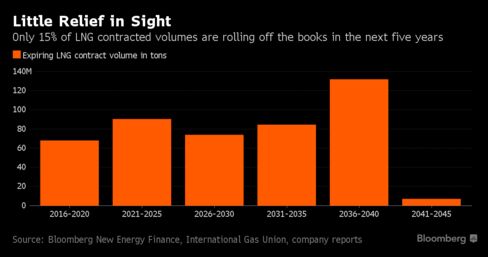
Less than 15 percent of long-term LNG supply contracts will expire in the next five years, according to data compiled by Bloomberg. Meanwhile, new projects in Australia and the U.S. are saturating the world with LNG, depressing spot prices this year in Asia’s energy trading hub of Singapore even as oil has risen about 20 percent. That’s giving buyers the incentive to try to renegotiate their deals with suppliers, according to analysts at Citigroup Inc. and Energy Aspects Ltd.
“Serious tensions will be seen in the market when oil starts transitioning to higher levels, driving contracted gas prices upwards,” Trevor Sikorski, an analyst with Energy Aspects in London, said by e-mail. “At the same time, the LNG spot market should stay low — and that wider gap between the two prices will mean a number of buyers unhappy with that spread and this will drive calls for renegotiation.”
Buyers Emboldened
Petronet LNG Ltd. in December renegotiated its deal with Qatar’s RasGas Co., resulting in a drop by more than half of the price the Indian importer was paying. China National Petroleum Corp. wants new prices in its deal with Qatar, Chairman Wang Yilin said in March. Cnooc Ltd. Vice President Li Hui said last month the company is negotiating within its existing contract with Royal Dutch Shell Plc’s BG Group unit for 8.6 million tons of LNG a year.
Petronet’s negotiations allowed it to drop the price it’s paying for LNG to less than $5 per million British thermal unit, Oil Minister Dharmendra Pradhan said last week. The price was about $13 last year. In return, Petronet agreed to increase it’s purchases from Qatar.
“For India, achieving a low LNG import price at less than $5 per million Btu, based on prevailing oil prices through contract renegotiation, should embolden other parties to press for similar or even better terms,” Citigroup analysts including Ed Morse said in a research note Thursday. “Indeed, Asian buyers appear to be waiting for LNG sellers to acquiesce amid the looming oversupply.”
Breaking The Oil Link
Spot LNG in Singapore was assessed at $4.443 per million British thermal units May 3, down 33 percent this year, according to Singapore Exchange Ltd. Brent crude was at $44.93 a barrel at 10:16 a.m. London time.
About two-thirds of 160 long-term contracts with known commercial terms are linked to oil prices, according to data compiled by Bloomberg. That includes deals signed in 2009 in which Osaka Gas Co. Ltd and Chubu Electric Power Co. Inc. agreed to pay Chevron Corp. for LNG from the Gorgon project in northwest Australia based on Japanese crude import costs through 2040.
Buyers will try to change the basis of their deals from an oil-based index to a natural gas index such as Henry Hub in the U.S. to protect against an expected divergence in oil and gas prices, Sikorski said. The crash in energy prices has made other hedging options more affordable, said Melissa Stark, energy managing director and global LNG lead at Accenture. Importers can invest in midstream assets, like shipping and storage, or even buy stakes in U.S. shale projects and fields.
“There are more options for buyers,” Stark said by e-mail. “But with these options come more complexity, the need for trading and risk management capability.”
As some long-term contracts end, buyers will be looking to enter deals that are shorter in duration and smaller in volume, Gautam Sudhakar, IHS Inc.’s director of global LNG, said by e-mail. Projects that supply LNG for these expiring contracts are typically older and have paid off debts, so they will be able to add supply at competitive prices to the spot and short-term markets, he said.

ENOC Announces Technip As Main EPC Contractor For Refinery Expansion Project
Emirates National Oil Company (ENOC) revealed plans to expand the capacity of its ENOC Processing Company (EPCL) Jebel Ali facility by 50 per cent.
The expansion project comprises of three separate packages at an estimated value in excess of US$1billion. The expected date for commercial production is Q4 of 2019.
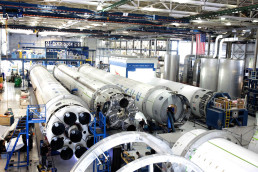
The main package of the project will add a new Condensate processing train to the existing facility, expanding its daily capacity to 210,000 barrels, up from its existing current 140,000 barrels per day. Additional processing units will also be added. These include a new LPG/naphta hydrotreater, an isomerisation unit, kerosene hydrotreater, and a diesel hydrotreater. These units will ensure that the refinery’s fuel products, which include gasoline, jet fuel and diesel, are capable of meeting expanding domestic fuel demand, as well as for export purposes.
Commenting on the project, His Excellency Saif Humaid Al Falasi, Group CEO of ENOC, said: “The UAE’s energy demand is growing at about 9 per cent a year. Since our establishment, we have grown into a responsible, profitable and sustainable organisation that has continuously met these needs. An emerging aviation sector and the evolving logistics needs of numerous businesses invoke a strategy that demands foresight. The refinery expansion is part of this strategy to develop enabling infrastructure that fuels the nation’s growth.”
“For a rapidly developing market like Dubai, strategic investments in projects demonstrate that development strategies like Dubai Plan 2021 are already being realised,” continued Al Falasi.
In response to the UAE’s drive towards clean energy, the expanded EPCL facility will manufacture products for the local market meeting stringent Euro 5 standards.
Technip, which was contractor on the Jebel Ali refinery from 1997 to 1999, has been awarded a large contract, covering the Engineering Procurement and Construction (EPC) for the design and construction of the processing unit. The Group’s operating Center in Rome, Italy, will manage the project. . The Front End Engineering Design was carried out by KBR. The licensor technology has been provided by UOP, Axens, and KT.
Marco Villa, President of Technip’s Region EMIA, covering Europe, Middle East, India, Africa and Latin America, commented: “We are proud to reinforce the long lasting relationship between Technip and ENOC for the expansion of the Jebel Ali Refinery, which was successfully delivered by Technip in 1999 with outstanding safety, schedule and quality performances. This award confirms Technip’s leading position in the refining sector and in the Middle-East downstream business, as well as its ability to provide its Clients with customised solutions combined with secure project delivery. We are firmly committed to repeat, and even more improve, our strong performance of the original Jebel Ali Refinery Project.”
The subsequent two packages of the project will include the construction of storage tanks and a 31,000 square foot warehouse. Suitable Contractors are currently being short listed prior to the tendering process for both packages.
EPCL over the years has been continuously expanding and improving its production to cater for the ever growing needs of the local and international markets. It was first commissioned in 1999, starting with two Condensate distillation units with a name plate capacity of 60,000 bblsd each, four MEROX units, and storage capacity of 1,283 thousand cubic meters.
In 2010, and at a cost of US $850 million investment, EPCL commissioned additional units for the production of Low Sulfur Naphtha, and Reformate. Both critical components for the blending of gasoline, and as a feedstock to Petro-chemical plants. Subsequent to this, in 2012, EPCL completed a debottlenecking project increasing capacity to 140,000 barrels per day.
ENOC is constantly focusing on expanding capacities in order to support domestic energy demand in alignment with Dubai Plan 2021 and in preparation for EXPO 2020. Along with the development of its refinery capabilities, the company will also extend its service station portfolio by 50 per cent by 2020.
The facility also includes an ISO 9001:2015/ ISO 17025:2005 certified laboratory, and is the only accredited organisation in the Middle East that is capable of carrying out critical tests for gasoline and jet fuel products.
Culled: https://goo.gl/OKXDc5
Shooting Star – The Condensate Star Has Faded, But What’s Next In The Conde Market? | RBN Energy
Way back when—before 2012—few outside a small cadre of oil producers and marketers paid any attention to condensates, or even knew they existed. Then two events shook the condensate world. First came rapid growth in the Eagle Ford, where crude oil production turned out to be almost half condensates. Then the Department of Commerce started allowing condensate exports while maintaining the ban on international sales of mainstream crude oil. Suddenly condensates were the star of the show. But like the careers of one-hit rock & roll wonders, the stardom didn’t last long. The crude oil price crash hit Eagle Ford hard, resulting in a disproportionate decline in condensate production. Congress then sent condensates further back into obscurity by removing the export ban for all crude oil in December 2015, eliminating any special status for the product. That was the end of the road for the condensate story, right? Wrong. Because during condensate’s day in the sun, billions were spent on pipelines, stabilizers, splitters, export facilities and refinery modifications, all focused on providing new markets for condensates. Oops. Today we consider how the next chapter of the condensate saga will play out.
This blog continues the Faded Love series on condensates (conde for short) that we started posting a few weeks back. In Part 1 we showed that while condensates (super-light crudes) are produced from all of the major basins across the U.S., the Eagle Ford in South Texas has been responsible for most of the production growth over the past five years, and that the Eagle Ford has been hit harder by low crude prices than any of the other major shale plays, resulting in declines in condensate production. We then touched on the splitters built to process condensates in the U.S. and on other infrastructure to handle segregated processed condensate for export –– now no longer required since the lifting of the crude/condensate export ban. Then in Part 2 we got into the weeds, looking at condensate production trends using the newly enhanced Energy Information Administration (EIA) dataset called the EIA-914, which gives us crude oil production statistics in 10 API gravity categories, including the two API gravity buckets above 50 degrees API where condensates reside. At that time the data confirmed that condensate production was falling, particularly in Texas. Since then, condensate production has continued to decline.
Figure 1 shows conde production in two of EIA’s 914 production data categories. The brown line is total U.S. production greater than 55 API, which fell from about 550 Mb/d to less than 470 Mb/d in May 2016. Slumping Eagle Ford production has been responsible for most of this decline. The blue line shows Texas production greater than 50 API. (EIA consolidates the 50-55 and 55+ categories for individual states for confidentiality purposes.) Even though the data is not apples-to-apples, it is still quite apparent that production of the lightest condensates is down by about 15% and that the decline shows no sign of abating.
One implication of the decline in production is a corresponding drop in conde exports. As shown in Figure 2 below—based on data from our friends at ClipperData—condensate exports ramped up from next to nothing in mid-2014 to 160 Mb/d by June of last year, then fell during the summer of 2015 as domestic demand for naphtha-range material pulled barrels out of the export market. Over the first five months of 2016, exports kicked back in again, but those gains came to a screeching halt in July when confirmed export volumes dropped to only 20 Mb/d. In the first few weeks of August, exports moved back to about 70 Mb/d (orange dashed circle).
Even though exports have been down lately, total conde volumes moving via water have been higher than might be expected considering that the price differential between Brent crude (the international benchmark) and Light Louisiana Sweet (LLS, the Gulf Coast benchmark) has averaged only about $0.30/bbl since June 2015. Conde prices tend to be loosely pegged to these two benchmarks. Thus it would seem that there would be little economic justification for moving this super-light crude from the Gulf to global markets if prices in the two markets are about the same, even though tanker freight rates are currently at ridiculously low levels. Nevertheless, barrels have moved –– a significant portion of them to U.S. refiners.
As shown in Figure 3 (left graph), the Texas Gulf Coast has been responsible for 76% of total condensates moved from U.S. port facilities. These volumes include both exports and cargoes on Jones Act-compliant vessels destined for markets in the U.S. About half of that total has come from Corpus Christi (orange pie segment, all Eagle Ford volumes), with much of the rest shipped out of Houston and Beaumont. Most of the remainder of condensate shipments has moved from the East Coast, with conde from West Virginia (blue segment) accounting for 10%, followed by New Jersey (7%) and Pennsylvania/Ohio (5%). (For more about East Coast condensates see our series titled in Whole Lotta Splittin’ Going On.) We’ll have more on Ohio condensates in an upcoming blog covering Marathon’s Cornerstone Pipeline plan.


The right graph in Figure 3 indicates the destination for these barrels. More than one-third of total shipments have gone to Europe (green pie segment), with most of the volume moving to the Netherlands, France and Italy (see our previous analysis of these condensate destination markets in What Condition My Condensate Was In). The second-largest recipient of U.S. waterborne condensate has been (drum roll, please) – the U.S. (aqua blue segment). Most of these barrels have been going to six destinations for use by refiners, splitters and blenders: Marathon at Garyville, LA; Petrobras at Pasadena, TX; Total at Port Arthur, TX; Hunt at Mobile, AL; Sunoco at Nederland, TX; and Plains All American at St. James, LA. For the most part, these condensates are moving directly or indirectly into the U.S. refining system, ending up as motor gasoline, including gasoline exports (see It’s a Small World After All). The remaining condensate outbound volumes have moved to the Middle East (10%), Latin America (10%), Asia/Pacific (9%) and various other destinations, some not yet determined (16%, black segment). Note that this last category includes a few ships that are apparently being used for floating storage – the ships have been anchored in the Caribbean for weeks.
Figure 4 shows how the sources of these volumes have shifted over the past two years. All along, the big driver has been Texas, with most volumes loading at Corpus Christi, Houston and Beaumont (orange bar segments, left graph). West Virginia (blue segments) was growing fast in 2015, but came off hard this year, mostly due to low crude prices that have discouraged drilling for wells with high condensate yields. Total volumes virtually collapsed in July (2016) due to lower production and seasonal demand in the U.S., recovering somewhat in August (red dashed box). The right graph indicates that Europe (green bar segments) continued to be the largest recipient of U.S. condensates, with the Louisiana market (red segments) taking a significant portion of barrels destined for U.S. markets.

So does all this mean that the conde star has faded and the product will forever be relegated to second-tier venues and sad reunion gigs? Hard to say. While ClipperData can identify the condensate moving out as “neat” product (that is, identified on the Bill of Lading as condensate), there also are conde barrels moving out as blend stock in light crude exports, mixed up with various other heavier crudes to create cocktails that can be labeled as “Domestic Sweet” or the generic “U.S. Crude”. That means that condensate still has a role as an opening act, if no longer the headliner. It is a similar story at the crude oil hub in Cushing, OK, where condensates from Oklahoma’s prolific SCOOP and STACK plays (acronyms for South Central Oklahoma Oil Province and Sooner Trend Anadarko Basin Canadian Kingfisher) are sought out as blendstock for various brews destined for domestic refiners.
But with condensates still moving to exports, local refineries and blend markets, what has happened to the condensate splitters built during the conde heyday to absorb what was then expected to be a surplus of this super-light crude? We will explore that issue in the next episode of this series.
Source: Shooting Star – The Condensate Star Has Faded, but What’s Next in the Conde Market? | RBN Energy

Pound-Dollar Parity Is Now A Possibility For Options Traders
What was close to unthinkable for the pound before the Brexit vote is now firmly on some traders’ minds.
They’re betting sterling will tumble to parity with the dollar, a level unseen in the U.K. currency’s history. In recent days, a number of wagers were put on for a one-for-one exchange rate, according to Depository Trust & Clearing Corp. data.

Options with strikes at parity
The pound, which had already been struggling this week amid growing talk of a so-called hard Brexit, plunged 6.1 percent in Asian hours on Friday to a 31-year low of $1.1841. The slump has made the possibility of a historic $1 level more real: a Bloomberg forecasting model, based on implied volatility, shows about a 7 percent chance of it happening within a year, compared with 3.2 percent yesterday.
“Certainly there are a few calls for parity, yes — there are a few that are positioned for it, that is their target and objective, or they’re hedged for fear it might go in that direction,” said Neil Jones, head of hedge-fund sales at Mizuho Bank Ltd. in London. “I wouldn’t say it’s a mainstream view,” but “the structural downtrend is probably still intact for now.”

The pound was down 2 percent at $1.2368 as of 1 p.m. London time, set for a weekly drop of 4.7 percent. That’s about the same as its slide during the week of the June 23 referendum, when Britons voted to quit the European Union. Sterling sank 1.9 percent to 90.01 pence per euro after touching 94.15 pence, the weakest since March 2009.
The lowest the pound has fallen versus the greenback in the past four decades is about $1.05 in February 1985. Bank of England data show it hasn’t dropped to parity for at a century.
The cost of hedging against sudden declines in sterling increased, according to risk-reversals data compiled by Bloomberg. The premium on six-month options to sell the currency versus the dollar over those to buy widened to 2 percentage points in the biggest jump since the Brexit result.
Why did the pound crash and what’s happening now?

Nigeria Starts Oil Production Outside The ‘Stormy’ Niger Delta
Nigeria has started the first commercial crude oil production outside the Niger Delta. First oil production commenced from the Aje field, in Oil Mining Lease (OML) 113, located in the Dahomey (Benin) Basin, offshore Lagos, on May 3, 2016.
Although Aje production is from a small oil rim of an essentially gas rich field, and is unlikely to deliver more than 12,000Barrels a day at peak, in a production period spanning at most 15 years, its commissioning is symbolic,in the 60th year of commercial oil discovery in the Niger Delta.
Nigeria has produced all its crude from the Niger Delta basin in the south of the country for 58 years. In the last 20 years, however, that production has been fraught with severe challenges, as recurring violence becomes part of the mainstream national conversation. The shut in of 250,000Barrels of oil a day due to the breach of the Trans Forcados System via a military grade attack on a subsea pipeline last February, is the latest evidence that unimpeded production in the basin cannot be guaranteed.
Aje is an offshore field located in OML 113 in the country’s offshore western flank, in what is known as the Dahomey Basin, a rift basin considered part of the West African Transform Margin, which includes basins in Ghana, Cote d’Ivoire, Sierra Leone and Liberia. Partners in the asset include Yinka Folawiyo Petroleum, New Age, Energy Equity Resources, Panoro Energy and Jacka Resources (whose interest is linked to a company named MXO, which is trying to divest).
“Subsea installation activities had been underway at Aje since January and were completed in early March ready for the hook-up of the Front Puffin FPSO, which arrived in Nigeria on the 16th of March”, according to Panoro Energy, a minority partner in the project .
“Oil produced from the Aje field will be stored on the Front Puffin which has production capacity of 40,000 barrels of oil per day and storage capacity of 750,000 barrels”, the London based, Oslo listed junior explains.
“Flow rates will be provided in Panoro’s next operations update, following a period of commissioning and well stabilisation”, the minnow adds.
Whereas there is another commercial discovery in the Dahomey Basin, notably the Lekoil-operated Ogo Field, there has not been rigorous exploration of this petroleum system and the likelihood that Dahomey will rival Niger Delta at any time for Nigeria’s crude output, is far-fetched.
Still, there is clear government recognition for “diversity” in basinal crude oil output. Last week, Ibe Kachikwu, the nation’s minister of state for petroleum and Group Managing Director of the hydrocarbon company NNPC, said that part of his priority lies in finding oil in the Chad Basin, in Nigeria’s insurgency ravaged northeast.
Aje field is situated in water depths ranging from 100 to 1,000 metres about 24 km from the coast. The field contains hydrocarbon resources in sandstone reservoirs in three main levels – a Turonian gas condensate reservoir, a Cenomanian oil reservoir and an Albian gas condensate reservoir. Panoro says that “AGR TRACS International calculated the gross Cenomanian oil Proved plus Probable Reserves estimate associated the Aje-4 and Aje-5 wells, and the gross Contingent Resources estimate associated with the future drilling of Aje-6 and Aje-7 wells.
At that time AGR TRACS International calculated these as 23.4MMbbl and 15.7MMBbl respectively (on a gross basis), indicating a mid-case expected ultimate recovery of 39.1MMBbl from the Cenomanian Oil Reservoir once all four wells have been drilled. AGR TRACS International also calculated the Turonian gas and condensate/oil best estimate gross contingent resource as 163MMBOE.

Refining Outlook Shaped By Regulation And Economic Growth | RBN Energy
The U.S. refining industry appears to be transitioning from an era of high margins and record throughputs. Falling crude prices at first increased refining margins – especially as demand for cheap refined products like gasoline expanded. Now product inventories are brimming and margins are squeezed. As we explain today the industry can look forward to an extended period of low crude prices while regulatory requirements and the pace of economic growth largely drive refined product trends.
We have previously covered Turner, Mason & Company’s analysis of the world refining market. Most recently in December 2015 we reviewed their analysis of global crude supply and demand over the next 10 years to 2025 – a detailed assessment of future sources of crude supply and refinery demand (see A New World Order). Turner, Mason has a deep understanding of refining and refining technology worldwide as well as the impact of changes in crude feedstock bought about by the U.S. shale revolution (see Here Comes The Reckoning Day). The company also produces a biannual review of industry fundamentals and key drivers – the latest version of which is titled “The 2016 Crude and Refined Products Outlook” (February 2016). The 160 page report covers a range of key topics for the refining industry including the current low crude price environment, refined product trends, regulatory issues impacting refiners and anticipated changes in infrastructure. The report contains an updated price and petroleum demand forecast from 2016 through 2030 that incorporates the impacts of crude production breakeven costs, price elasticity for petroleum demand and effects of regulatory initiatives and geopolitical events. The outlook starts where everyone is focused these days – with crude prices and supply/demand. We’ll provide a glimpse of Turner, Mason’s view on that topic first and then hone in on a couple of important trends that the report highlights in the refined product markets – impacting gasoline and diesel.
Turner, Mason believes that crude prices are unlikely to rebound from their current low levels (~$30/Bbl in February 2016) until the world oversupply is countered by increased demand or a fall off in production. Their base case forecast calls for a recovery beginning late 2016 with prices exceeding $40/Bbl in the second half of 2016. This case premises that crude supply and demand returns to equilibrium by the middle of 2017. However, the current high inventory levels and crude supply overhang will not work its way through the market until the 2020’s with prices before then remaining below $70/Bbl – increasing into the $70/Bbl to $80/Bbl range through the 2020’s. In the short term Turner, Mason expects Iranian crude output (after their return to the market following the lifting of sanctions in November 2015) to grow by 0.5 MMb/d in 2016. U.S. crude production is expected to decline to 8.8 MMb/d in 2016 (from recent levels of about 9.2 MMb/d) as producers continue to cut back drilling and completions in response to low prices. Production is expected to return to 9.7 MMb/d by 2020 – it’s highpoint in 2015 – as prices increase. Turner, Mason points out that lower crude prices have been good for refiners – providing higher margins but margins are now falling in response to oversupply of refined products. The company does not believe that ending of U.S. export restrictions in December 2015 (see The Great Beyond) will have a material impact on U.S. crude supply in the short term.
Now we turn to important trends in refined product demand that the report highlights.
Reverse of Dieselization
Over the past 25 years distillate has been the leading driver of worldwide-refined product demand after surpassing gasoline in the early 1990’s. Recall that distillates are refined products blended from components in the middle distillation range of a typical crude barrel. Distillates are refined into products like diesel, heating oil and jet fuel (see Complex Refining 101). A good deal of the growth in distillate demand in the past 25 years is tied closely to economic growth in developing economies – where trucks, agricultural machinery and light industrial demand consume a lot of diesel. Another source of diesel demand growth has been European autos. Regulators in Europe encouraged diesel passenger vehicle sales in order to reduce carbon emissions (among other reasons). As a result of increased diesel demand worldwide new refinery investment has occurred in the past several years to increase the distillate yield. Over 1 MMb/d of distillate capacity has been added since 2013 –and another 3.5 MMb/d of new distillate production is expected online in the next 6 years.

Figure #1; Source: Turner, Mason & Company
However the rising diesel demand trend is now expected to slow in coming years. In the developing world an overall slowing in the pace of growth is expected to reduce distillate demand. In Europe diesel has fallen out of favor as a passenger vehicle fuel in the wake of the recent Volkswagen scandal. It turns out that most diesel passenger vehicles emit more nitrogen oxide (NOx) pollutants under realistic driving conditions than are permitted by law. This is already leading to a reduction in diesel vehicle sales and changes in the tax regime in European countries such as France, the U.K. and Spain to reduce diesel use incentives. For the moment a majority of new passenger vehicles in Western Europe still run on diesel but this will change in coming years. Figure #1 shows the Turner, Mason world demand outlook for distillates through 2030. You can see the growth in demand between 1990 and 2013 as well as the flattening out between 2014 and 2018 (green dashed oval). But Turner, Mason sees demand for distillates recovering after 2020 (blue dashed oval) when new international bunker fuel regulations come into effect that limit sulfur levels in ship fuel. This regulation is expected to result in increased demand for distillates to blend with or replace fuel oil in ships bunkers (see If The Price Is Right for more on bunker fuel regulations).
Culled: http://bit.ly/24AW75P